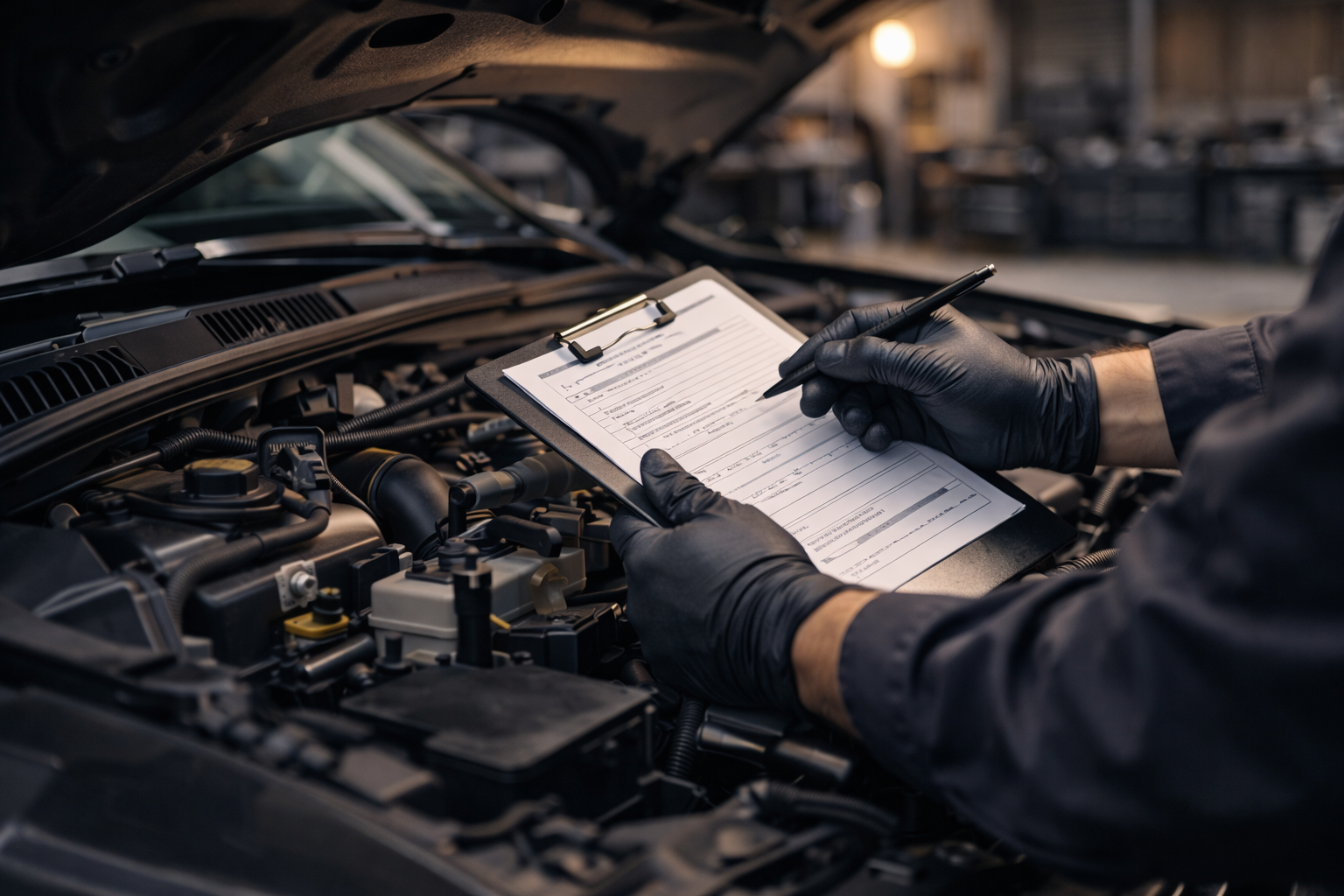
Scheduled maintenance keeps your vehicle reliable, efficient, and safe by servicing key systems at manufacturer-recommended intervals. Staying on schedule helps prevent breakdowns, protects warranties, and reduces long-term repair costs. We service all vehicle types—from daily drivers to fleets—using mileage- and time-based guidelines tailored to how you drive.
Typical Maintenance Intervals (General Guidelines)
- Every 5k–7.5k miles: Oil & filter, tire rotation, multi-point inspection
- Every 15k–30k miles: Air & cabin filters, brake inspection, fluid checks
- Every 30k–60k miles: Transmission service (when applicable), coolant service, spark plugs (vehicle-dependent)
- Every 60k–100k miles: Belts, hoses, suspension checks, major system inspections
Actual intervals vary by vehicle, engine, and driving conditions.
Vehicle-Specific Maintenance We Support
Fleet Service & Commercial Vehicles
Mileage-driven service plans focused on uptime, safety inspections, brakes, tires, and fluid longevity.
Electric Vehicle (EV) Service
No oil changes—focus on cooling systems, brakes, suspension, battery health checks, and software-related diagnostics.
Hybrid Vehicle Repair & Service
Combines EV and gas maintenance: engine service, regenerative braking systems, cooling circuits, and battery-related inspections.
European Vehicles (Mercedes-Benz, BMW, Volkswagen)
Condition-based maintenance, extended oil intervals, brake wear sensors, and manufacturer-specific service schedules.
Asian Vehicles (Toyota, Honda, Subaru, Nissan, Kia, Hyundai)
Reliability-focused maintenance with consistent mileage intervals, fluid services, and timing-related inspections.
Domestic Vehicles (Ford, Chevrolet, Jeep)
Traditional mileage-based service with attention to drivetrain, suspension, and towing-related wear.
Why Scheduled Maintenance Matters
Preventive service costs less than reactive repairs. Following a structured maintenance plan improves fuel efficiency, extends vehicle life, and reduces unexpected downtime—especially for fleets and high-mileage vehicles.
Our Process
- Review your vehicle’s mileage, age, and driving habits
- Follow manufacturer-recommended service guidelines
- Inspect current wear items and fluid condition
- Prioritize preventive maintenance to help avoid costly repairs from missed services